
About Capital Stacks of Journalism
How this report came about, how we did the research and where its limits lie, and the people and organizations who made it possible.
Why we did this
In 2025 the two of us shared a stage at the Impact Days in Vienna, on a panel about funding journalism. Afterwards, someone from the audience who did a little investing came over with a confession: they had never thought of journalism as something that costs money. “Nowadays you sit down with a laptop, write the text, press publish, and that’s it.”
They were not wrong: the cost of producing content had really collapsed even before the advent of generative AI. But they were not right either. Publishing may be almost free, but building an institution that publishes with standards, lawyers, editors and enough stability to sustain a two-year investigation still takes capital. It has for at least the past fifteen years, whatever the next fifteen bring.
We should say plainly that we still believe in those journalistic institutions, and this study is about them. Creators are doing some of the most exciting public-interest journalism around and are reshaping how content is produced, distributed and consumed all over the world, but most groundbreaking investigations still come out of newsrooms rather than solo accounts. Safety, standards, fairness and shared knowledge matter.
Milo had a story to match. Raising money for an audience-funded project in Austria, where digital reader revenue is still a novel idea, he had been told by a veteran executive: “I don’t believe in audience revenue.” We both frowned at that one. Audience revenue is not a belief. It exists. It works, market after market: not easily, not for everyone, but reliably enough to have a formula.
People with resources are often curious about journalism and well-intentioned toward it. Then the money goes to climate, technology or social impact. Journalism, they tell us, is hard to understand, and it has the reputation of a bottomless bucket. The sector is partly to blame. Two decades of platform disruption and political interference taught publishers to tell a story of hardship. That may be a fine story for a grant application, but it is a toxic one for an investor.
It was Milo who said we had to do something about it. The one-line description we have used ever since is that “investing in journalism is not always like setting your money on fire.” Sometimes it is. But not always, and we thought the “not always” could use some evidence.
So from autumn 2025 to summer 2026 we looked at more than thirty ventures launched across Europe in the past fifteen(ish) years and settled on twenty-one: newsrooms, publishers, information ventures, call them what you like, that got together, built something and became viable, sustainable and in several cases rather profitable. This report tells their stories.
We are not fundraising for anything, and we are not promoting the twenty-one, though an investor could do worse than start there. We want to crowd more capital into the ecosystem and, along the way, show operators how others have done it. This is not an academic study; we explain how we did it, and where its limits lie, under Methodology and disclaimers.
Underneath it all is a very short argument: journalism still matters, businesses can be built to produce it and what can be built can be invested in.
Peter Erdelyi and Milo Tesselaar
Masthead
- Initiated by
- Milo Tesselaar
- Lead author & editor
- Peter Erdelyi
- Associate editor
- María Paula Ángel Benavides
- Lead researcher
- Márton Sarkadi Nagy
- Associate researcher
- Vanda Pyszny
- Legal & finance lead
- Miklós Rózsa
- Legal support
- Zsófia Lehóczki
- Operations lead
- Dániel Baranya
- Design
- Anikó Bukta (print), Peter Erdelyi (digital)
Capital Stacks of Journalism is a project of three organizations: the Center for Sustainable Media, new – Strategy & Concepts and relevant.
Methodology and disclaimers
This is not an academic study
Capital Stacks of Journalism is an applied research project with a practical purpose. Primarily, we want to help investors understand (in concepts and language familiar to them) how independent media businesses are built, financed, grown and made sustainable. Secondarily, we hope to give media operators a useful scaffold: a picture of what relatively successful ventures have done, against which they can examine their own choices and trajectories.
The report has a strong survivor bias
We deliberately studied twenty-one ventures that survived long enough to become financially viable and, often, profitable. That makes them useful to learn from, but it also limits what can be inferred from their experience.
When, for example, we say that none of the founders we interviewed reported a disastrous price increase, that does not mean price increases cannot go badly. Ventures that made similar decisions and subsequently failed are, by definition, absent from our sample.
The patterns in this report should therefore be read as observations about successful companies, not as universal prescriptions.
We are part of the ecosystem we study
The Center for Sustainable Media and members of the project team have professional relationships with a number of the organizations and people featured in this report. Lead author Peter Erdelyi was part of the founding team of 444.hu and worked there in various leadership roles for ten years, until 2023.
This proximity inevitably shapes our relationship to our subjects. It also helped make the research possible, giving us access to founders and executives whose time, candor and trust were essential to the project.
Editorial control
Capital Stacks of Journalism is the independent editorial production of Peter Erdelyi, Milo Tesselaar and the Center for Sustainable Media team, supplemented by clearly identified outside perspectives contributed by other experts.
We used generative AI throughout the research and editing process
AI tools complemented our desk research; helped transcribe, organize and condense interviews; assisted us in analyzing collections of statutory and voluntary filings, interviews and existing case studies; and helped compare, edit, shorten and refine successive versions of the text. AI was also used in the design process.
We used Claude most extensively, including its Opus and Fable models, and ChatGPT Sol and Astra to a lesser extent.
How we did the research
Capital Stacks of Journalism began with conversations between us in late 2025, after the encounter described in the introduction. We knew it would be a substantial undertaking; we underestimated quite how substantial. The finished report runs to roughly 30,000 words across eleven chapters and five outside perspectives, plus an introduction, executive summary, conclusions and outlet profiles. Over eight months, our team logged more than 1,500 hours on the project.
We began with more than thirty European ventures and gradually narrowed the cohort to twenty-one as we learned more about their finances, business models and histories. Lead researcher Márton Sarkadi Nagy, an investigative journalist, led the examination of statutory filings and wider open-source research, working closely with Vanda Pyszny. Milo Tesselaar and Peter Erdelyi then conducted roughly ninety-minute interviews (often longer) with founders, CEOs and other executives, alongside a standardized survey that allowed us to compare key data across the cohort. Where a legal entity, publication and operating business had different start dates or structures, we examined the case individually.
Peter created most of the text, with Milo and the wider team challenging, restructuring and interpreting the findings; María Paula Ángel Benavides played a central role in structuring, checking and editing the report. Every featured venture was subsequently given the opportunity to review the factual material concerning it. This corrected small errors and misunderstandings, but did not give subjects editorial control over our conclusions.
We also asked a number of experts to contribute outside perspectives. Author and serial media investor Turi Munthe writes about what it is like to risk money in information ventures. Jim Egan from the Reuters Institute at the University of Oxford examines grants and their role in helping early-stage media startups grow. Because this study has a very strong survivor bias, we asked Christopher Buschow, Professor of Digital Journalism at Hamburg University of Technology and Head of Digital Journalism at Hamburg Media School, to bring in findings from his research on failed media startups. International media funding expert Sameer Padania explores the policy implications of the report, while Khadija Patel, formerly of IFPIM and IPI, reflects on what the capital stacks of European journalism look like from South Africa and the rest of the world.
Acknowledgments
First and foremost, we thank the organizations that made Capital Stacks of Journalism possible: ERSTE Foundation; the European Media and Information Fund, managed by the Calouste Gulbenkian Foundation; Limelight Foundation; Mercator Switzerland; Rudolf Augstein Stiftung; Stefan Batory Foundation; and V-Ventures. This report simply would not exist without their support.
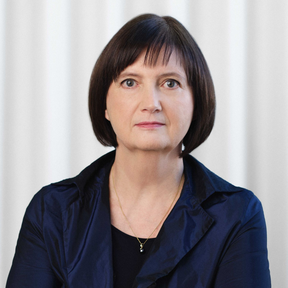
“Journalists are not just the heroes of our time. Investigating those in power has always been risky. However, since digitalisation has rendered traditional newspaper publishing close to unprofitable, new heroes have emerged: media executives. Capital Stacks of Journalism explores the success stories of courageous and clever media professionals with unconventional business models.”
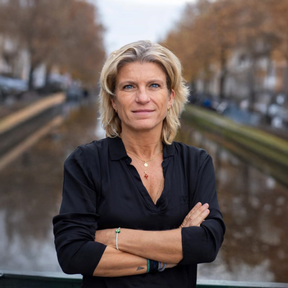
“Independent journalism needs more than funding; it needs sustainable businesses that can attract capital and grow without compromising their editorial independence. At Stichting Veronica we want to learn from the European news organizations that are already making this work: how they built viable business models, what enabled them to grow, and what made them investable.”
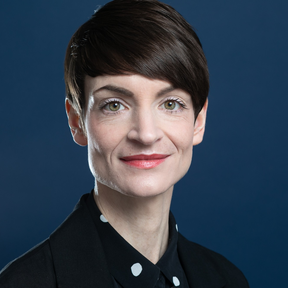
“Journalism needs more than good ideas. It needs the right capital to grow. Better evidence on what makes public-interest media sustainable can help bring more capital into journalism and show that public value and commercial viability can coexist.”

“Despite funding independent media being core to our strategy at Limelight Foundation, it has been difficult to deduce what a healthy pipeline of financial support for independent newsrooms should look like. I’m very excited that this research was done, which will help strengthen the resilience of the sector as well as our support.”
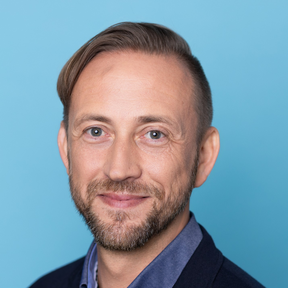
“Independent journalism is not only about producing trustworthy information. It is also about having the financial independence to investigate, challenge those in power and resist manipulation. This is closely connected to our work on building resilience to disinformation, which is why we support Capital Stacks of Journalism and efforts to strengthen the financial foundations of independent media.”
We are also grateful for additional support from International Media Support and Newspack at Automattic.
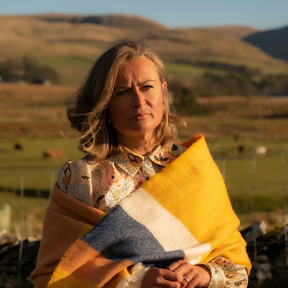
“Money for media development from traditional sources isn’t coming back. So, we are focussed on understanding how to ensure a supply of capital is more locally robust and diverse than before. This report is a critical component in realising those ambitions and stimulating market change.”
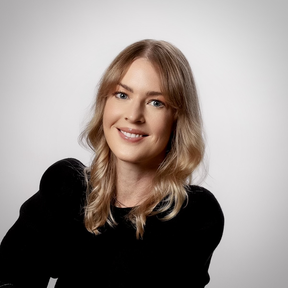
“Independent journalism depends on more than great reporting. It requires smart business thinking. Capital Stacks has amassed a critical body of evidence to help publishers make the business, infrastructure and investment choices that allow news organizations to achieve long-term sustainability.”
The Journalism Funders Forum and Philea gave us access, introductions and invaluable help spreading the word.
We are also grateful to Martin Kotynek and Katharina Binder of the Media Forward Fund; Andy Kaltenbrunner; Leonard Novy; Alexis Eremia and Hinnerk Hansen of Impact Days Vienna; Evelyn Hemmer; Nina Schnider; Sebastian Klein; Lucy Küng; Madhav Chinnappa; Jim Brady; and the Media Viability Manifesto community. Their questions, encouragement, challenges and accumulated experience made our thinking better.
Our contributors, Turi Munthe, Jim Egan, Christopher Buschow, Sameer Padania and Khadija Patel, brought perspectives we could not have supplied ourselves and we are grateful for their time and insights.
We also thank the founders, executives and teams of the twenty-one ventures at the center of this research. They gave us hours of their time, shared numbers that are rarely public, and spoke candidly about what worked, what did not and what they learned.